
Test
Blood, stool, saliva and hormone tests, far more detailed than standard National Health Service (NHS) panels.
Functional medicine looks at how your body’s systems work together, using detailed lab tests, your history and lifestyle to build a plan that treats the cause of chronic illness.
Free, no obligation. Initial consultation £325. See fees
20+ years in practiceMember of the National Institute of Medical HerbalistsInstitute for Functional Medicine (IFM) Certified Practitioner

Conventional medicine is excellent for acute care, but often struggles with long-term conditions such as autoimmune disease. Functional medicine asks why the problem started and what’s keeping it going.
It’s how medical herbalists have always worked, now combined with the best of modern diagnostics.
Blood, stool, saliva and hormone tests, far more detailed than standard National Health Service (NHS) panels.
A thorough case history covering lifestyle, environment and genetics.
Herbal medicine, diet, exercise and supplements only where needed.
Personalised health coaching to help changes stick.
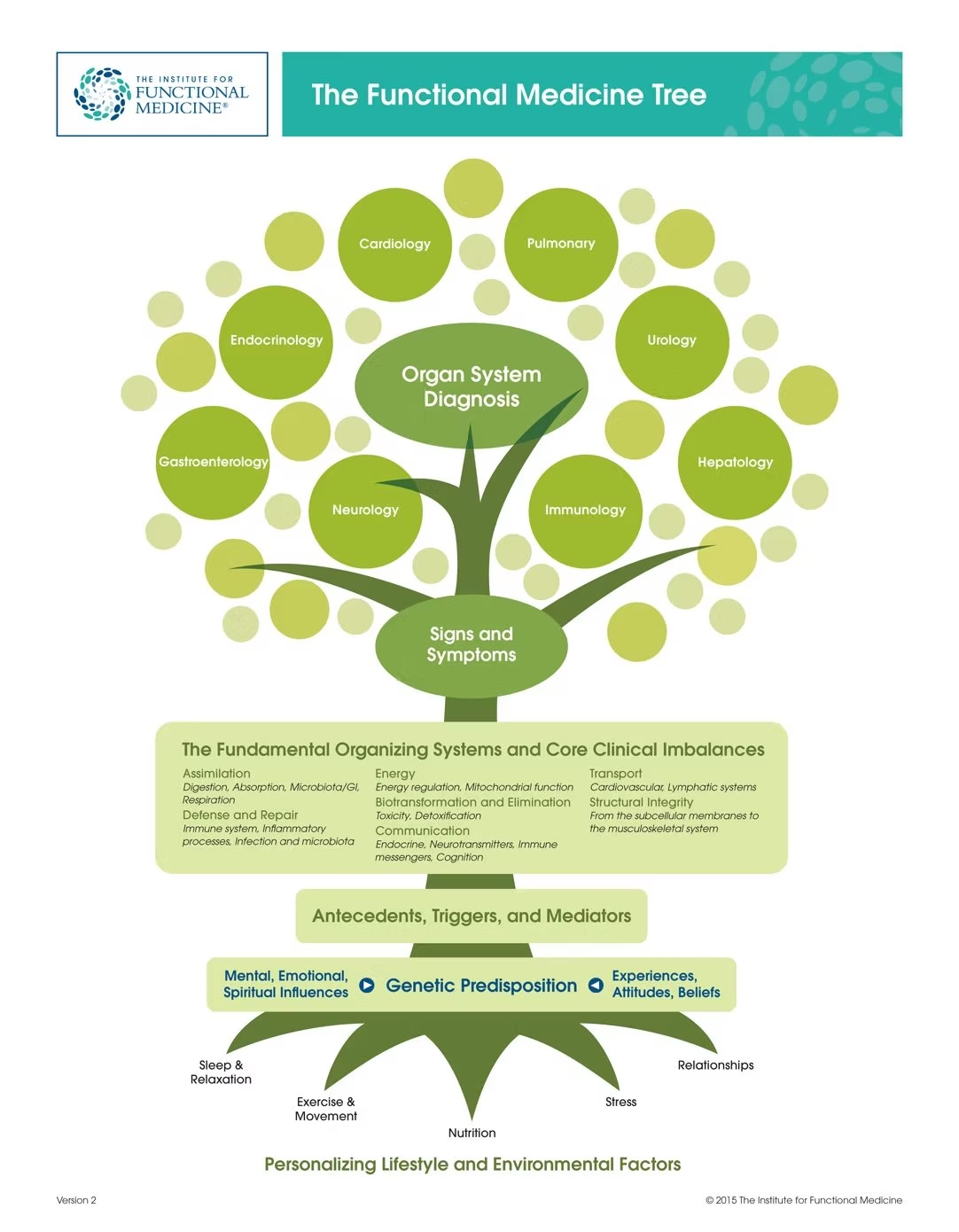
Conventional medicine usually starts at the top of the tree, with a diagnosis for each organ system. Functional medicine works from the ground up.
By finding and correcting what’s happening at the roots and trunk, the symptoms in the branches can begin to settle.
A routine cholesterol check usually measures three markers: total cholesterol, high-density lipoprotein (HDL) and low-density lipoprotein (LDL). To properly assess heart and metabolic risk, I typically test up to 28.
Private testing does cost more, but it gives a far clearer picture and a strong focus on prevention.
Co-founded by Jean and Charmaine Shepherd in 2017, CogMission uses functional testing and the principles of the Bredesen Protocol to find and treat the causes of cognitive decline.
Advanced training includes gut health, hormones, immunity, cardiometabolic health, mitochondrial health, environmental toxins and reversing cognitive decline.
Functional medicine looks at how your body’s systems work together to find why a long-term health problem started and what keeps it going. It uses your history, lifestyle and detailed lab tests to build a personal plan, rather than treating each symptom separately.
Your GP is essential for diagnosis, emergencies and acute care. Functional medicine works alongside it, spending more time on your history and using more detailed tests to look for underlying causes of chronic problems. I recommend you stay registered with your GP and keep them informed.
Depending on your needs, these may include blood, stool, saliva, urine or breath tests from specialist UK laboratories. Examples are a detailed gut microbiome test or a heart and metabolic panel of up to 28 markers. I’m a qualified phlebotomist, so I can take blood in clinic.
Functional medicine helps find what’s going on. Herbal medicine is one of the main ways I then support you, alongside diet, exercise and supplements only where needed. Medical herbalists have always looked for the cause, so the two fit naturally.
Yes. I’m a Certified Functional Medicine Practitioner with the Institute for Functional Medicine (IFM). I’m also a medical herbalist, in practice since 2004, and a member of the National Institute of Medical Herbalists.
Book a free 15-minute call and we’ll work out the best next step together.
Book a free 15-minute callFree, no obligation. Initial consultation £325. See fees